
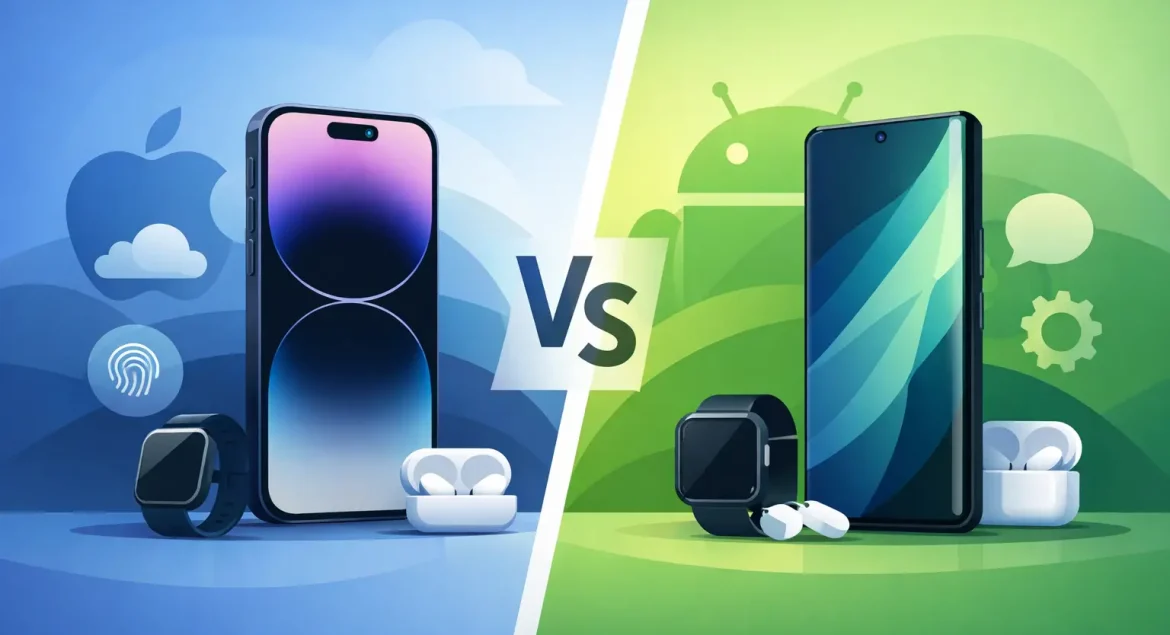
A premium phone is not just a larger display and a better camera. It is the device you use for work messages, mobile payments, photos, navigation, entertainment, and the accessories on your desk or in your bag. The iPhone vs Android flagship decision comes down to how you use technology every day, what devices you already own, and how much control you want over the experience.
Apple’s latest iPhones, Samsung Galaxy S models, Google Pixel devices, and flagship phones from brands such as OnePlus and Xiaomi all deliver fast performance, strong displays, and advanced cameras. The better option is rarely the one with the longest specification sheet. It is the one that fits your budget, preferred ecosystem, and upgrade plans.
iPhone vs Android Flagship: The Core Difference
An iPhone offers a tightly managed hardware and software experience. Apple designs the phone, the iOS operating system, and many of the services that connect the device to a Mac, iPad, Apple Watch, AirPods, and Apple TV. For shoppers who already use Apple products, this can make setup, file sharing, calls, and accessory selection more straightforward.
Android flagships offer more variety. Samsung focuses on large, feature-rich displays and productivity tools. Google Pixel phones emphasize clean Android software, smart features, and computational photography. OnePlus often targets buyers who value fast charging and high-performance hardware. Other brands bring different priorities, including foldable designs, camera systems, and price points.
That difference in choice matters. Buying an iPhone means choosing a consistent Apple platform. Buying an Android flagship means choosing both Android and a manufacturer’s approach to it.
Software, Updates, and Everyday Use
iOS is designed around consistency. Menus, settings, and app behavior tend to feel familiar from one iPhone generation to the next. Apple also provides software updates for its phones for many years, which can help a premium device stay useful longer and retain value when it is time to upgrade.
Android has improved significantly in update support, particularly from Samsung and Google. Current flagship models receive multiple years of operating system and security updates, but the exact policy varies by brand and model. Check the update commitment before buying, especially if you expect to keep your phone for four years or more.
Android gives users more flexibility in areas such as home screen layouts, default apps, file management, multitasking, and notifications. Samsung’s DeX feature, for example, can be useful for professionals who want a desktop-style workspace when connecting compatible devices to a display. iPhone users may find iOS less customizable, but many prefer its predictable layout and close integration with Apple services.
For families, the choice can also affect how easily devices work together. iMessage and FaceTime are convenient when most family members use iPhones. Android works well with Google Messages, Google Meet, WhatsApp, and other cross-platform services, particularly for households with a mix of devices.
Camera Quality Is More Than Megapixels
At flagship level, both iPhone and Android phones can capture excellent photos in daylight, low light, and indoor settings. Comparing megapixels alone will not tell you which phone takes better pictures. Image processing, lens quality, sensor size, stabilization, and camera software all matter.
iPhones are widely valued for dependable video recording, natural color handling, and reliable results across photo, video, and social media apps. If you shoot frequent videos for work, family events, or content creation, an iPhone is often a safe choice. The camera experience is consistent and easy to use without extensive manual adjustment.
Android flagships can offer more camera hardware options. Samsung’s Ultra models commonly include powerful zoom cameras, while Google Pixel devices are known for strong portrait processing, night photos, and useful editing tools. Some Android flagships also provide higher-resolution sensors and more detailed manual camera controls for shoppers who want to adjust exposure, focus, or color settings themselves.
Consider what you photograph most. For children, pets, travel, and quick sharing, the phone that gives you a good image on the first attempt may matter more than a specialty zoom lens. For concerts, wildlife, sporting events, or distant subjects, an Android flagship with a dedicated telephoto camera can be the better fit.
Battery, Charging, and Accessories
Battery life depends on screen size, brightness, mobile signal, apps, and camera use. Both iPhones and Android flagships can comfortably cover a typical day, but larger Android models frequently have more physical battery capacity. Real-world results still vary by device, so it is worth comparing independent battery testing for the specific model rather than relying only on battery size.
Charging is one of Android’s clearest advantages. Many Android flagship phones support faster wired charging than iPhones, which can be helpful for busy commuters, students, and travelers. Some models also include reverse wireless charging for topping up compatible earbuds or a smartwatch.
Apple’s MagSafe ecosystem is a major benefit for iPhone buyers. Magnetic cases, wallets, stands, mounts, battery packs, and wireless chargers provide a broad selection of compatible accessories. Android has its own expanding range of Qi wireless charging accessories, and some recent flagship models support magnetic accessories, but compatibility is not as uniform across all brands.
Before purchasing a phone, check the items you will need alongside it: a protective case, screen protector, charging cable, wall charger, car mount, wireless charger, and power bank. A lower-priced phone can become less of a bargain if replacing accessories or chargers adds significantly to the total cost.
Ecosystem Compatibility Can Decide the Purchase
If you use a MacBook, iPad, Apple Watch, AirPods, or Apple TV, an iPhone usually provides the most convenient pairing. Features such as AirDrop, shared photo libraries, device handoff, and Apple Watch support are designed for Apple devices. The Apple Watch, in particular, requires an iPhone.
Android flagships are a strong match for Windows PCs, Google services, and a wider selection of smartwatch brands. Samsung Galaxy phones pair naturally with Galaxy Watch models, Galaxy Buds, tablets, and TVs. Google Pixel phones are a logical choice for buyers who rely on Gmail, Google Photos, Google Home, and other Google services. Android also works with many Bluetooth audio products, smart home devices, and wearables across different brands.
There is no need to buy every product from one manufacturer. However, matching your phone to the devices you already use can reduce setup time and avoid compatibility surprises.
Price, Storage, and Long-Term Value
Flagship pricing spans a broad range. Apple’s premium iPhone models, Samsung Galaxy S Ultra devices, foldable phones, and high-capacity storage configurations can all reach the top end of the market. Standard flagship models from Samsung, Google, OnePlus, and other Android brands may offer premium performance at a lower entry price.
Android buyers often see more frequent promotional offers, trade-in options, and price reductions after launch. That can make a previous-generation flagship especially attractive if you want excellent cameras and performance without paying for the newest release. iPhones usually hold their resale value well, which can offset a higher purchase price when you trade in or sell the device later.
Storage deserves attention. If you record 4K video, download games, or keep a large offline music and photo library, choose more storage from the start. Most modern flagships do not offer microSD card expansion, so the storage configuration you buy is generally the storage you keep.
Who Should Choose an iPhone?
Choose an iPhone if you already use Apple products, want long-term software support, value reliable video quality, or prefer a simple and consistent interface. It is also a practical choice for shoppers who want a large selection of cases, chargers, mounts, and wearables with clear compatibility.
An iPhone is not automatically the best option for every premium buyer. Its charging speeds may be less competitive, customization is more limited, and moving from an Android-based setup may require changes to the apps and services you use most.
Who Should Choose an Android Flagship?
Choose an Android flagship if you want more hardware choices, faster charging, deeper customization, specialized camera features, or a phone that fits your preferred budget. It is especially worth considering if you use a Windows computer, Google services, Samsung devices, or need productivity features such as advanced multitasking.
The trade-off is that Android experiences vary more by brand. Compare each model’s update policy, camera strengths, charging standard, included accessories, and smartwatch compatibility instead of treating every Android flagship as the same product.
The right premium phone should make the rest of your tech easier to use. Start with your current devices, then select the screen size, camera features, storage, protection, and charging accessories that suit the way you actually use your phone.